The Man Without Fear.
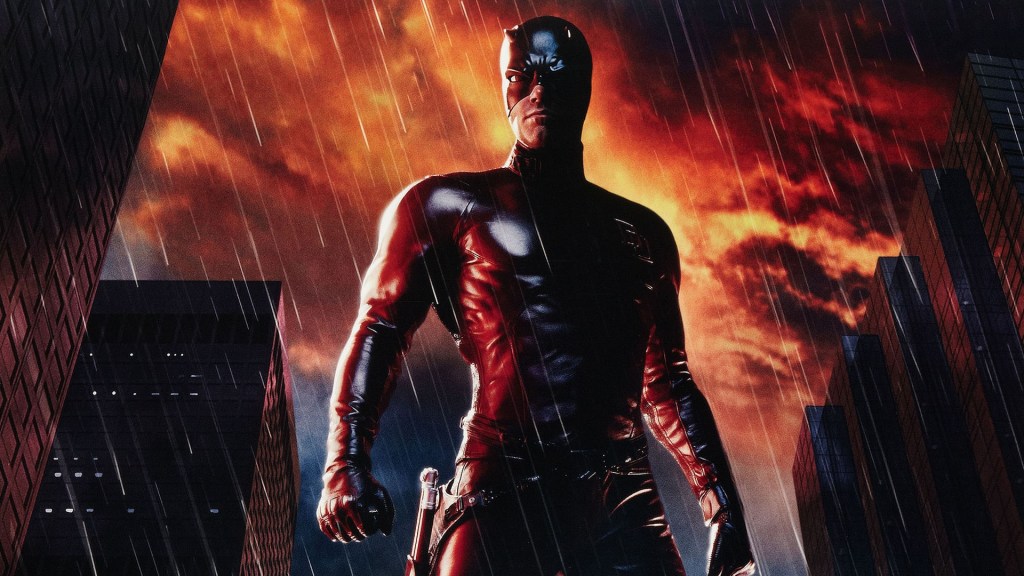
This weeks film review is a bit of a deep cut. Way before shared universes were the norm for superheroes in film, there were a certain niche of Marvel films that were less concerned with which great threat would come next, or which hero would make a cameo in the inevitable sequel. Examples include the films Blade, Hulk, and the titular film of discussion, 2003’s Daredevil. Daredevil is an odd film. Long before dawning the cape and mask of Batman, Ben Affleck stepped into the role of the blind lawyer from Hells Kitchen. Does the film have any saving graces? Or should this one remain in the “style over substance” catalogue of films that plagued the early 2000s? Let’s find out on Gaber’s Two Cents.
The opening of the film is predominantly centered around the childhood of young Matt Murdoch. Matt, a bright but socially inadequate boy who finds solace in boxing, shares his life with his father, Jack Murdoch. Jack, also known as ‘Jack The Devil’ Murdoch, was once a celebrated fighter but now resides in the shadows of his former glory days in the ring. However, a freak accident involving radioactive waste blinds Matt, resulting in a profound enhancement of his senses. This transformation elevates him beyond the boy he was before
Origin stories are tricky in superhero films, as having a surprise factor is quite limited when one knows what the outcome of the origin will be regardless. However, it must be said just how riveting the cinematography and the score are for this section of the film. Particularly when Matt awakens after his life altering accident. You can almost feel the scuffs and scraping of the cotton bandages covering his eyes as Matt nervously tugs and pulls, simultaneously each individual water drop that falls from his IV creates a thunderous wave that sounds as if a tsunami is approaching. It’s a enveloping setup that has aged quite well, especially for a film that is over twenty years old.
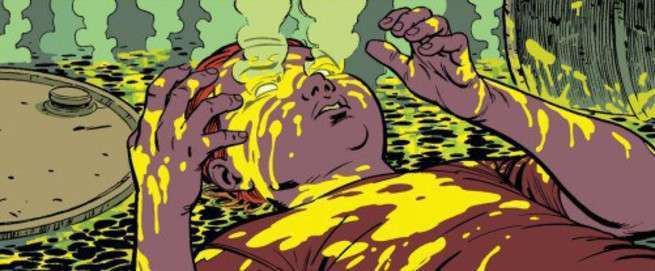
When Matt’s father is murdered, the catalyst for Daredevil’s emergence becomes possibly one of the most exquisitely portrayed superhero origins ever captured on in the genre. A rose delicately tumbles from the killers hands, a trademark of sorts, and Matt’s father lies beneath his son beaten and broken. Without getting into too much context, Jack Murdoch’s death stems from refusing to take a dive in a anticipated fight. The most interesting part about this entire sequence is just how beautifully haunting the entire scene is. Matt feels the bloodied face of his father, with greyed out eyes staring into the dark alleyway. He squeezes the rose beside his father, blood trickles down his small hand as the choir like score screams with the silence of a church mouse, sparking the last time young Matt Murdoch would ever feel fear again.
Praise must go to cinematographer Ericson Core and composer Graeme Revell. Without these two, this opening and several scenes within the film would almost certainly not have the same impact if they were not involved. Daredevil has always been a tragic character, similar to themes within a Shakespeare tragedy or Cormac McCarthy novel. So a somber and haunting ambience is needed to craft such a origin, which Core and Revell delivered in elegant fashion.
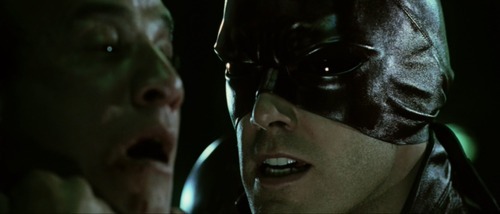
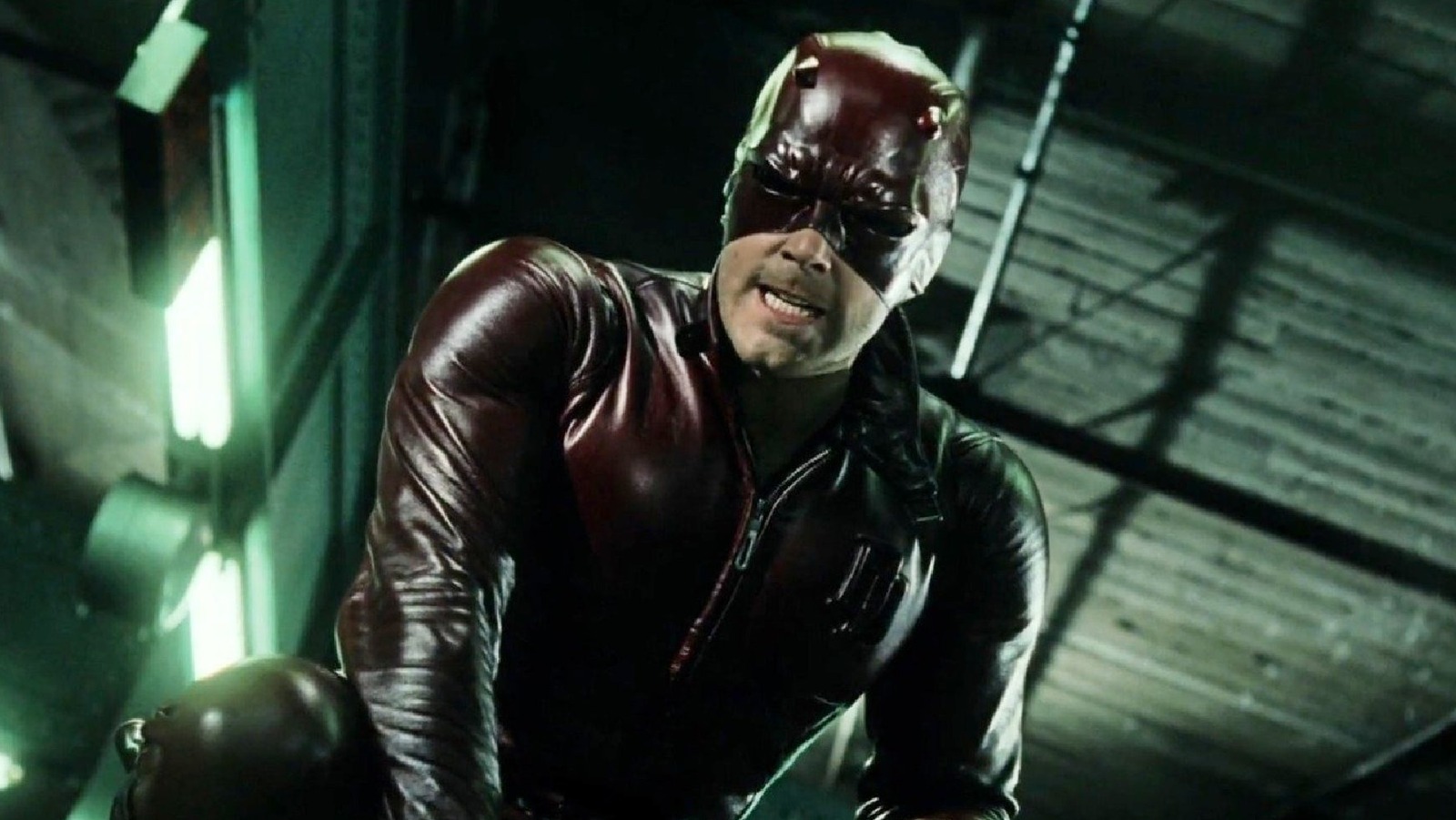
Speaking of cinematography, this film has some epic looking shots. While the main Daredevil suit looks far from practical to say the least (Just look up any scene with Ben Affleck running with the suit on) it does provide some eventful moments. The bar fight scene in particular is a standout example. Brooding in the rafters in plain sight, it’s hard not to get goosebumps when the goons in the room realize there is a devil like figure watching them from above. While not practical in the sense of actual crime fighting, the suit nonetheless provides the film with some striking imagery that matches the vibe director Mark Steven Johnson was going for.
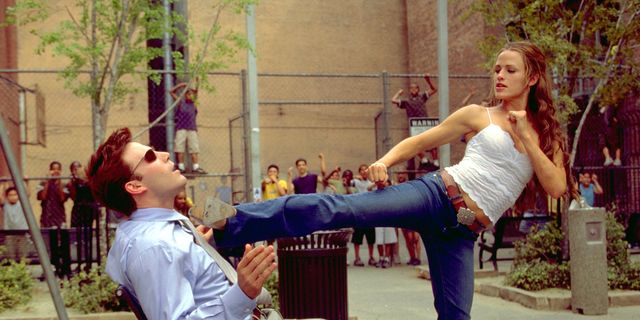
Alright technical praises aside, how does the writing fair? Occasional clumsiness describes it well. While the film does have it’s own unique visual flair, from time to time the writing could have used the same touch. Cringe comes to mind when watching some of the films middle sequences. The most potent example being a brawl between Matt Murdoch and his love interest Elektra, played by Jennifer Garner, on an elementary school playground. With Kung Fu like exaggerated jumps, quips left and right, and an alt rock song blaring within the background, one would almost immediately assume that this movie came out in the early 2000s. No easy passes should be given, but this sequence can be excused for simply being a product of the time, even if it is as equally implausible as it is eyeroll inducing.
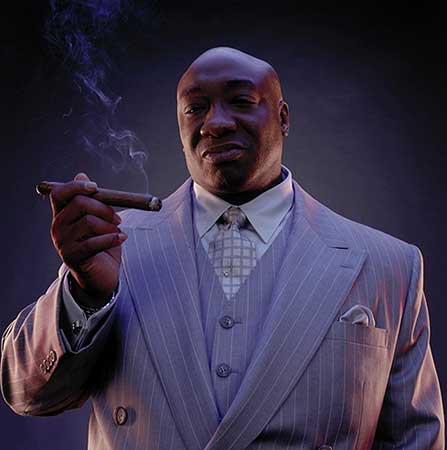
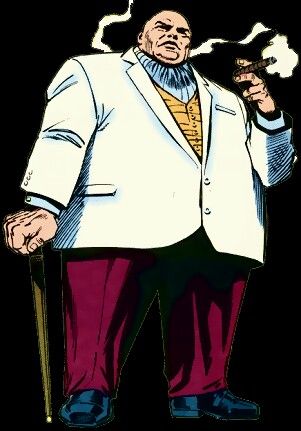
Occasional sloppy writing aside, how are the villains within this film? Cartoonishly evil? Check. Physically imposing? Check. Ties to the hero’s origin? Check. The main antagonists within the film, Kingpin and Bullseye, played by the late Michael Clarke Duncan, and the always excellent Colin Farrell fit nicely within the films plot. Kingpin’s mind is just as brutish as his body, and Duncan brings a restrained performance that compliments Farrells frenetic turn as the mad marksman who never misses. It’s a shame that Duncan was never offered more villain roles, because you cannot take your eyes off of him with every devilish grin and monologue that Kingpin delivers.

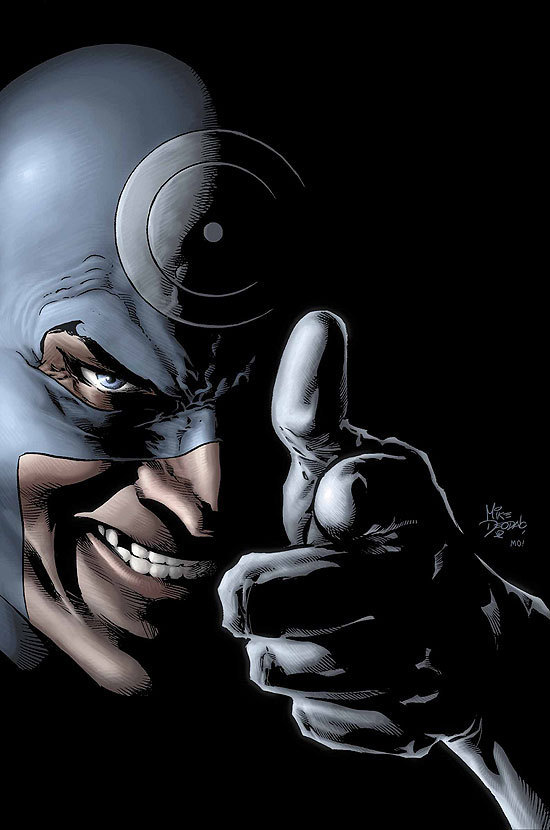
Farrell as Bullseye is also a treat. With most likely one of his most overstated performances of his career, Farrell brings humor into a film, that is almost entirely devoid of any comedy. It also helps that the inventive ways in which he shows off his marksmanship never fail to entertain. An example of this is when he flicks a peanut into a elderly lady’s mouth in the middle of a plane ride, subsequently killing her and halting any more conversation about her sons love life. Farrell plays the character unnervingly well, and it’s just as terrifying as it is undeniably hilarious. While abrupt, the tone switch up that occurs within Farrell’s scenes elevate the film, rather than becoming detrimental.
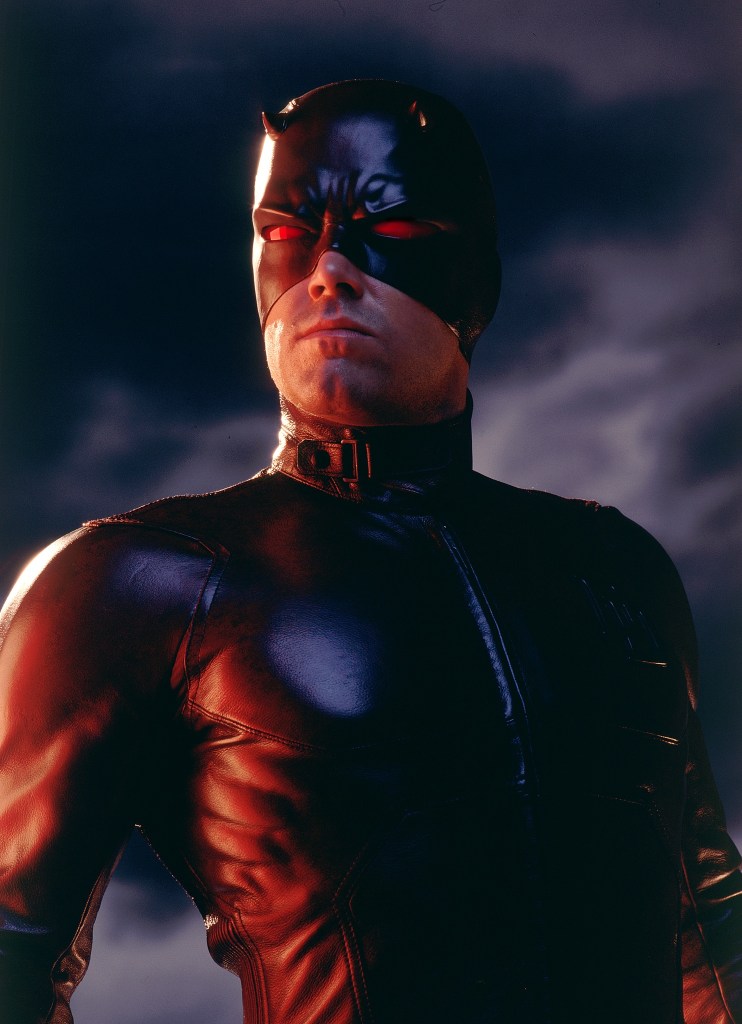
By the time the credits roll, it’s obvious you haven’t watched the best superhero film ever, there are certainly things to dislike. However, the positives outweigh the negatives and make this oddly entrancing movie worth checking out. Occasional bad writing aside, Daredevil manages to throw some heavy punches in it’s third act, and they end up paying off in the long run more than one would think. All that and more is why The Man Without Fear’s 2003 film outing received this particular Cent Score.
Cent Score: 3 Cents
The pros outweigh the cons, sit back, don’t think too much and you’ll be fine.
Thanks for checking out this week’s Film & TV piece. Feel free to tap the thumbs-up button and leave a comment below. Don’t forget to subscribe if you want to be notified of new posts each week. Make sure to check back next week for an all-new piece. See you all next time on Gaber’s Two Cents.

 Gaber's Two Cents
Leave a reply to Deborah Knost Cancel reply