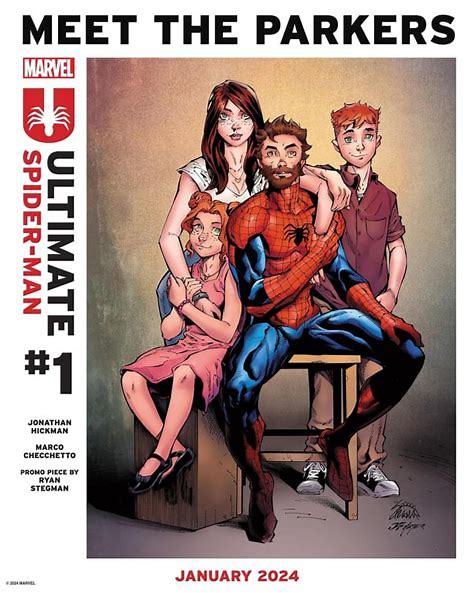
With the release of writer Jonathan Hickman’s new series, Ultimate Spider-Man, we are given a Peter Parker that evolves into the friendly neighborhood web-slinger at a much older age. Rather than juggling high school and villains, this version of Peter has children, is married, and Uncle Ben is alive and well. With reviews looking solid, one might ask, why do comic heroes in general, not age?
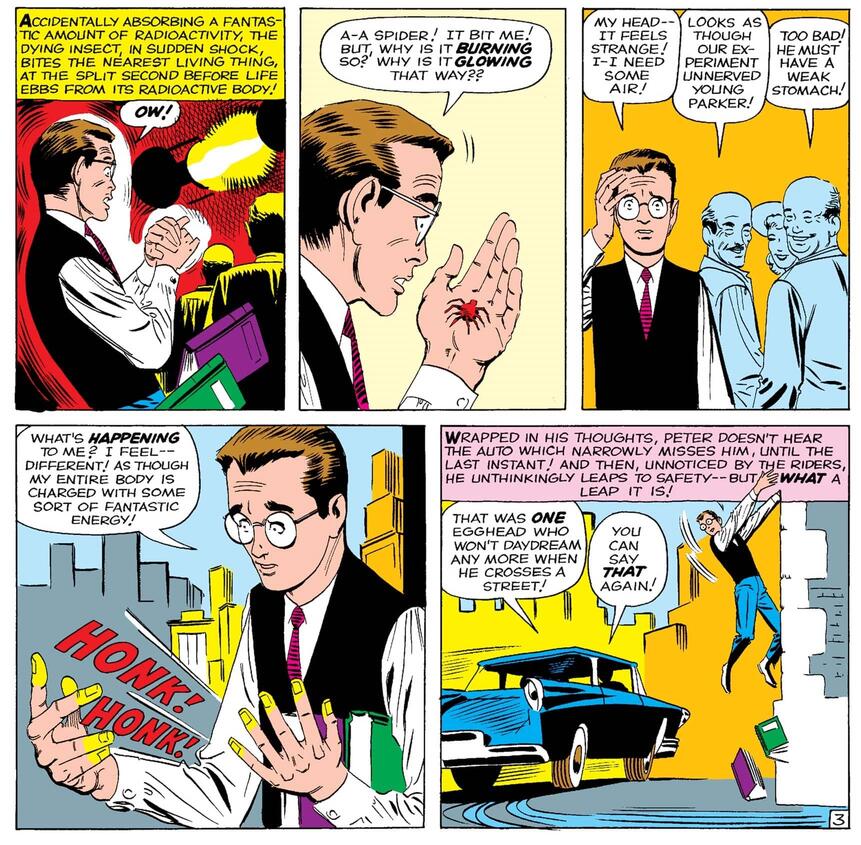
Well, they technically do get older, but not in the sense that we are familiar with. In 1962, the first appearance of Spider-Man, Peter Parker was a mere fifteen years old. While he has aged throughout his sixty plus year history, he sort of just stopped at a twenty something getting closer to his thirties and has remained that age for quite some time. At least in the main continuity of Marvel stories that are explored on Earth-616.
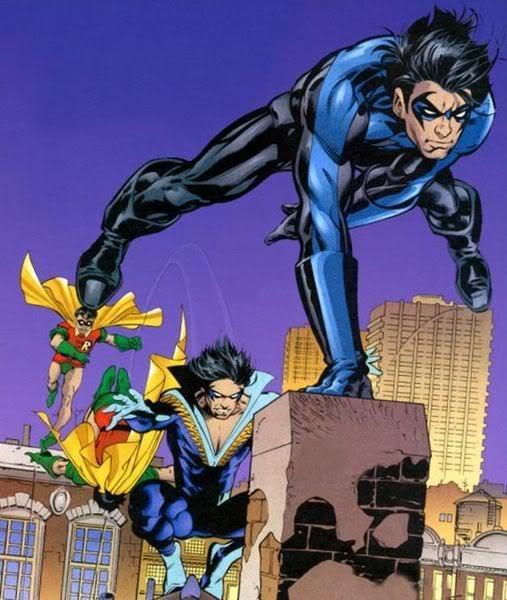
Spider-Man Isn’t the only hero this applies to either. Examples include Batman, Superman, Captain America, etc. Again, this isn’t the case in one shots or other stories that are not set within their main universes, but why not give it a try. You’d probably say, “Well Gaber, no one wants to watch their favorite heroes continue to get older and inevitably die of old age!” Well, why not? We already alleviate our disbelief when sidekicks continuously grow until reaching a point of maturity where they carry on their current mantle, or ditch their spandex for a new, more independent look.
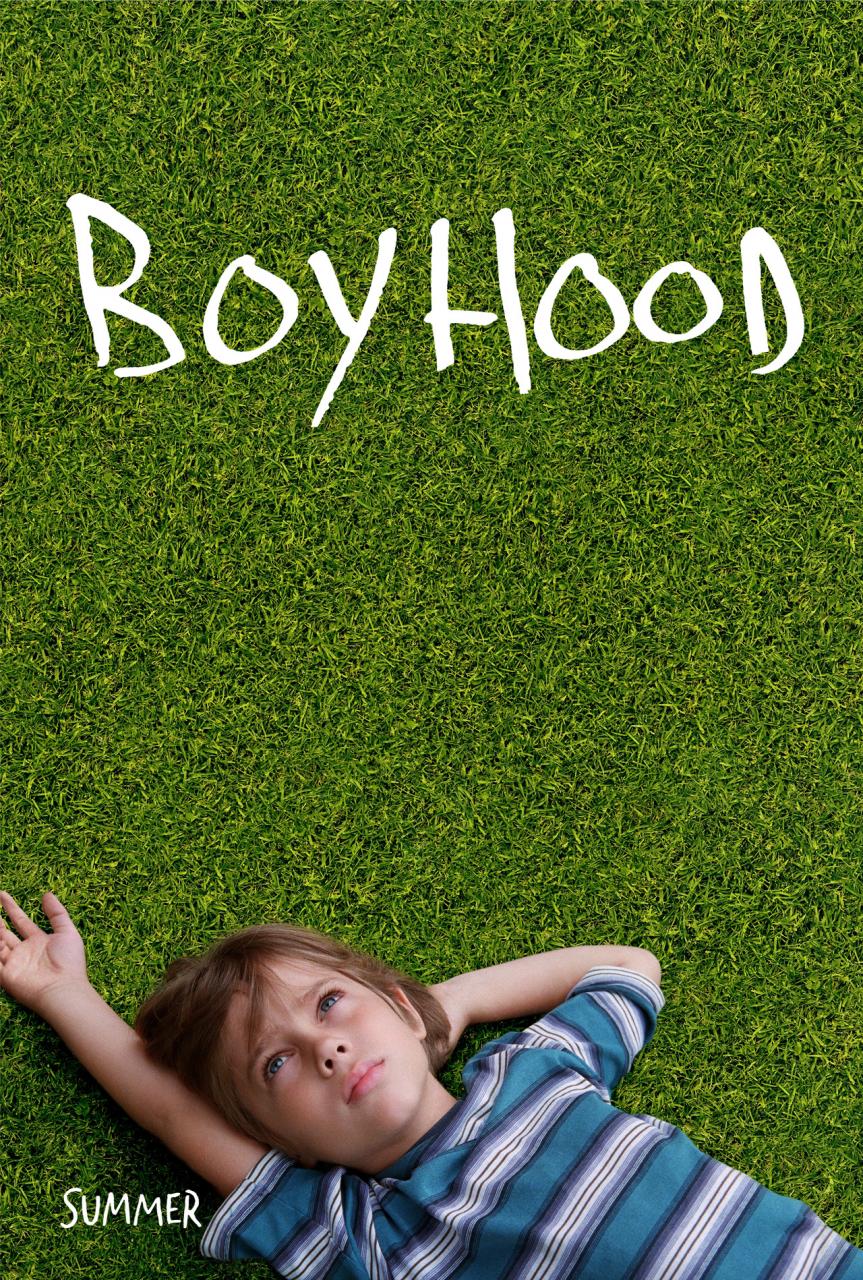
Why is it that the kids age at such an accelerated rate, and the adults continue to hold on to that thirty something look for years and years. I’m not even writing this to say that this trope is necessarily a bad thing, but how rad would it be to see a hero’s story begin at such a young age and follow their tales and adventures while they are getting older just the same as you. There would be a such a strong connection between the reader and the character that one would feel like they have known the character all their life. Again, I know what you’re saying, Harry Potter or Percy Jackson grow up before the readers eyes. Yet, what I’m referring to is more akin to director Richard Linklater’s film, Boyhood. Let me explain.
Let’s take a hero like Spider-Man for example. We begin his story when he is fifteen years old, in 2024, not 1962. We follow Peter through his high school years, his college years, him finally maturing into a grown man, but we don’t stop there. With every year that passes, Peter gets older. This could be acknowledged by having his age next to the issue number, or the corresponding year of how long he has been Spider-Man. For example, “The Amazing Spider-Man Year 12, or The Amazing Spiderman Age 27. I personally think going the year classification route would feel a tad smoother, but you get the point. With each year that passes, new problems arise, and not just villains either. Life can be chaotic, unpredictable, and unfair, but it can also lead to some pretty incredible uplifting moments as well. Chronicling Peter, not just with a storyline that will last eight months, or a new adventure of the week, but examining the everyday troubles that life has to offer for a hero like Spider-Man.
You might be thinking that this could lead to some very dull storytelling, but on the contrary, how cool would it be to see things on the other side of the spectrum, and not just the black and white dilemmas that plague most comic book character origins. Another plausible concern would be continuity. With it being normal practice for writers to switch to different titles often, this lifelong storytelling effort would not be for the faint of heart. Which is why this experiment would be a separate title form the main Spider-Man comic. It could even examine confrontations or events that occurred from a completely different perspective. Allowing us to see Peter reflecting on occurrences in a different light, rather than when he is in the heat of battle.
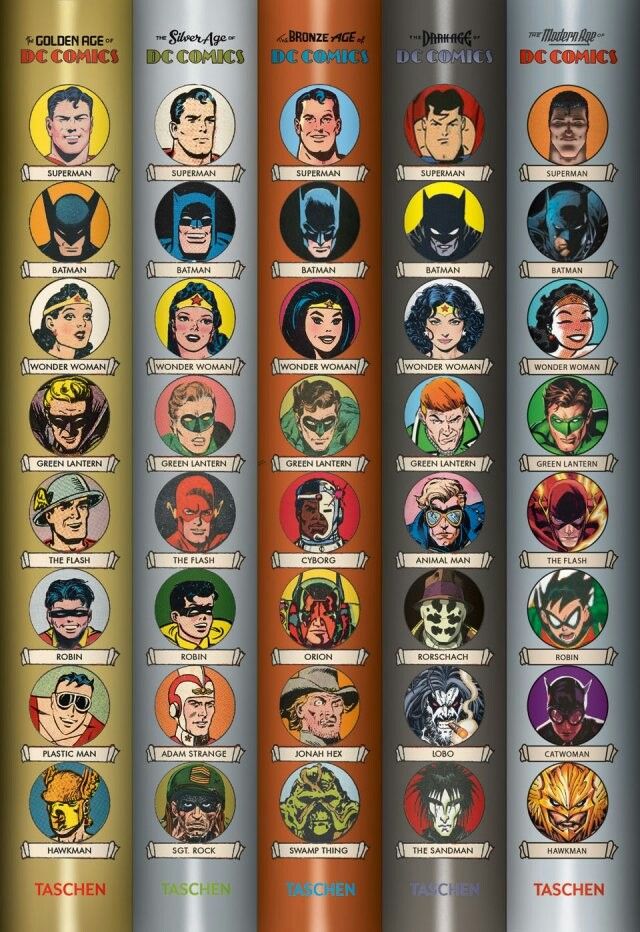
I could keep writing but then I think I would get disillusioned with this concept by how massive an endeavor it would be. That doesn’t mean something like this should not be attempted. I love comic books, and I love comic book storytelling, it’s just that some major events can feel inconsequential when the heroes we are reading about remain essentially the same by the stories end. Could this be a solution? Maybe. Should it be used for every comic hero out there? No probably not, but there is great promise in growing old with the characters you hold dear. Like the late great Stan Lee once said on Spider-Man’s world-renowned popularity, “He’s the one who’s most like me – nothing ever turns out 100 percent; he’s got a lot of problems, and he does things wrong, and I can relate to that”.
Thanks for checking out this week’s Opinion Piece. Feel free to tap the thumbs-up button and leave a comment below. Don’t forget to subscribe if you want to be notified of new posts each week. See you all next time on Gaber’s Two Cents.
 Gaber's Two Cents
Leave a comment