There is only Doom.
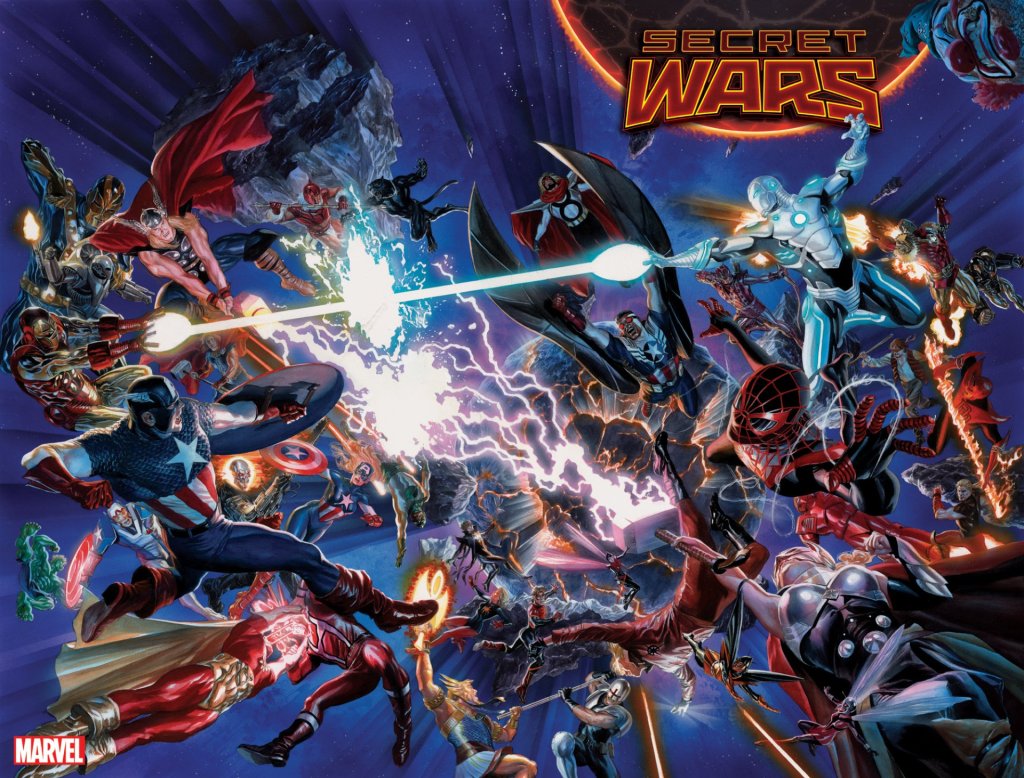
2015’s limited series, Secret Wars, is an epic tale that pits Marvel’s most iconic heroes against the all powerful Doctor Doom. Between the breathtaking art and superior character arcs, this story serves as a minor reboot of sorts for Marvel’s prime universe, Earth-616. However, some odd dialogue choices, and an abrupt ending keep this series from reaching it’s true potential. Let’s find out how and why on Gaber’s Two Cents.
The opening pages detail a war raging on both Earth-616 and Earth-1610 (Earth-1610 is commonly referred to as the Ultimate Universe) as both worlds are colliding into one another, destroying everything in it’s path. With hope lost, a select group of heroes manage to escape the carnage, where they awaken on the planet Battleworld. There Doom has become a god and created a world that fuses both the old and new of each respective earth.
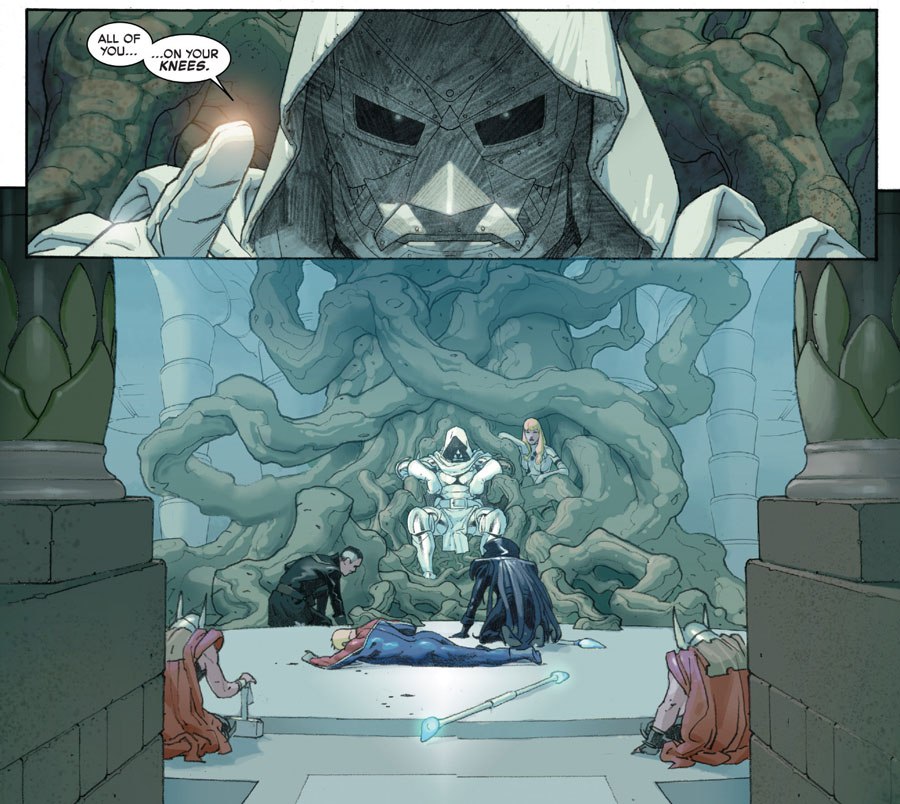
Visually, this chaotic world ending threat is drawn in exquisite detail. With the world around them turning to dust, scattered heroes fight amongst themselves, attempting to save a world where hope is nowhere to be found. Artist Esad Ribic, captures this symphonic mayhem with panels that can make any Marvel fan blush. For an event that attempts to reach even bigger depths than the catastrophic storylines that came before, Ribic outdoes himself time and time again. Even the action scenes contained within the pages express themselves in a cinematic manner. With such a remarkable portrayal, it is only natural to hope that Marvel Studios takes inspiration from Ribic’s artistry when adapting Secret Wars for the screen.
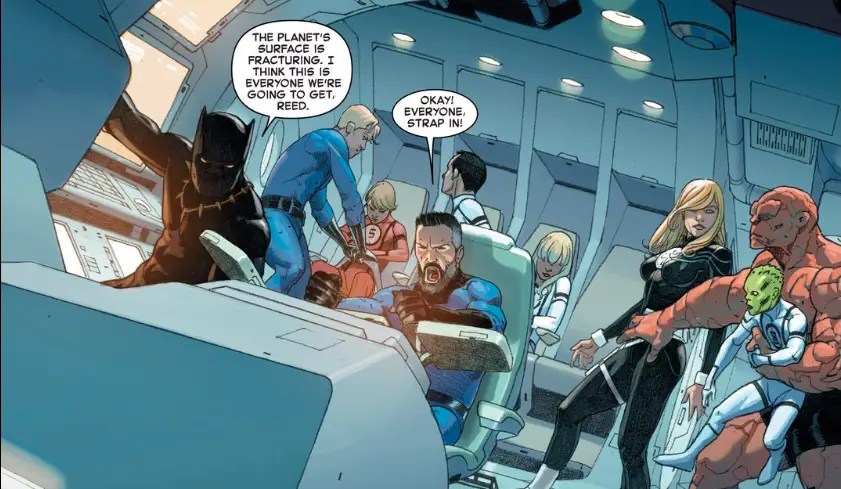
Writer Jonathan Hickman is challenged with the daunting task of bringing all of these heroes into a concise and compelling tale, and for the most part he succeeds. Big hitters like Black Panther, Captain Marvel, and Thor all get there chance to shine. While even smaller street-level heroes like Miles Morales and Peter Parker, who both share the Spider-Man mantle, have great moments that stand out and provide memorable dialogue. However, what Hickman truly succeeds in is his portrayal of Fantastic Four nemesis, Doctor Doom. Doom has always been one of the more imposing big bads in the Marvel Universe, and here it is no different.
Doom has several iconic quotes throughout this book, so much so that there are too many to count. With every bleak speech, we are shown a version of Doom that is now so powerful that even he knows that he is the only complication in his “perfect” world. This plot mechanic blends the story together quite nicely, since Doom is usually regulated to making Reed Richards life a living hell. The irony of Doom being the only thing holding back this new world from perfection is a very unique take on the character, and I only wish it was explored a tad more to further develop the psyche of this all powerful god.

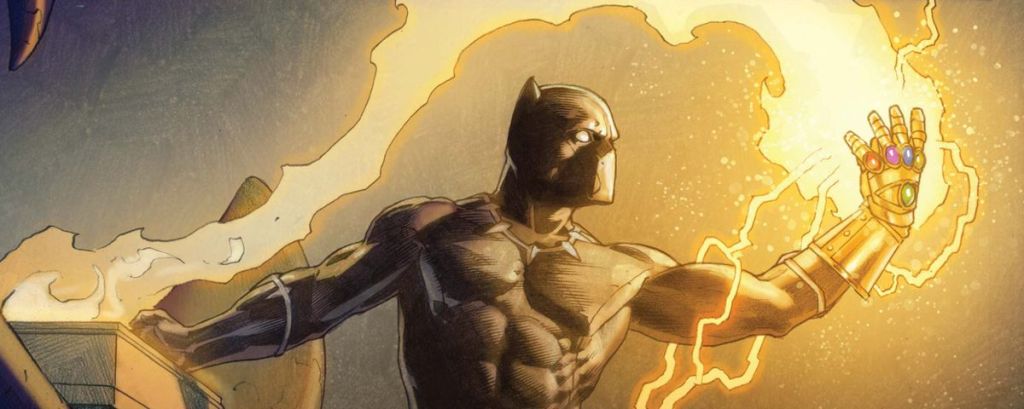
Another highlight from Hickman’s work is the amount of jaw dropping moments that pull from Marvel’s most powerful lore. For example, Black Panther evening the odds against Doom with a fully garneted Infinity Gauntlet, or Doom literally pulling Thanos’s spine from his body when challenged by the mad tyrant. It’s all really insane stuff that somehow manages to get crazier with each panel. For a story that aims to raise the stakes and demonstrate to the reader the enormity of the events that unfold. Simply put, it gets its cake and eats every last bite.
While there is plenty of praise to go around, there are some bizarre choices that end up hurting the book in the long run. For one, sometimes the dialogue can be superb, and then occasionally become too exposition heavy, or outright mundane. An example of this awkwardness comes from Valeria Richards constantly referring to Doom as “daddy”. Minor sure, but it can drag you out of the more dramatic moments when you hear an almost 16 year old teenager constantly refer to Doom as daddy. The middle issues in this series, specifically 4 through 7 are the weakest throughout the book. With some of the more important heroes getting limited time in the spotlight, for more exposition heavy panels of energy detecting machines and family drama. It’s not like it completely destroys the momentum that came before, but it definitely doesn’t capitalize on what made the beginning issues so stellar.
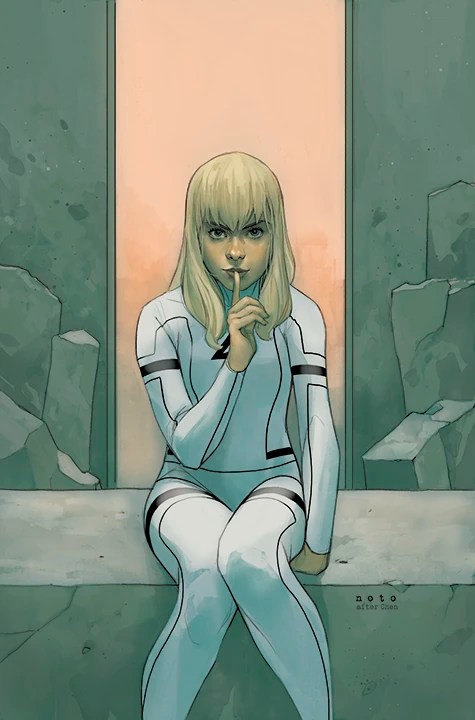
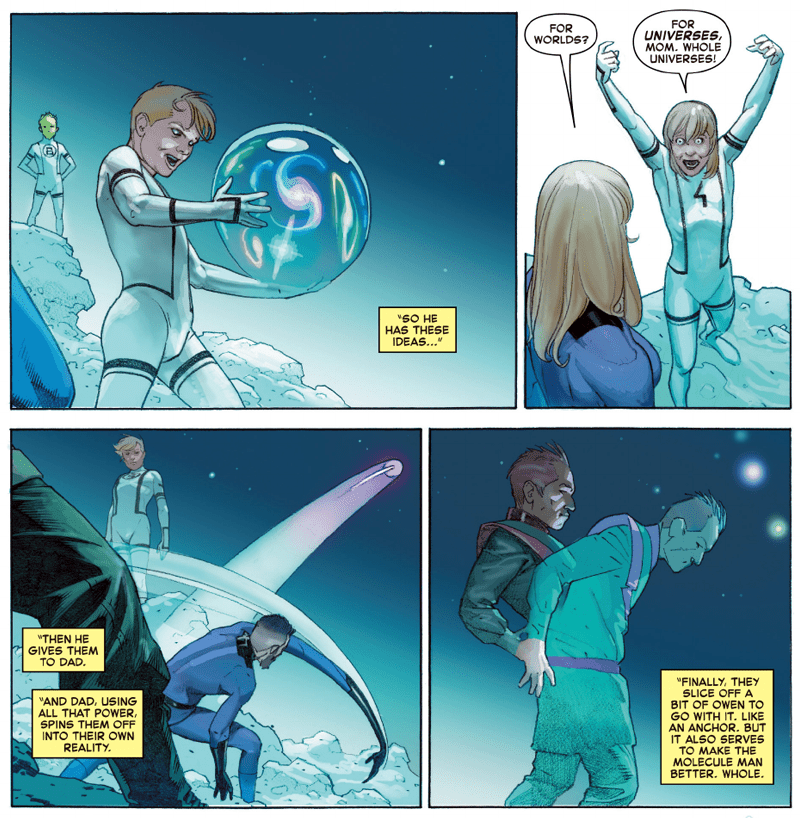
By far the weakest element of this story is the ending. Reed Richards and Doom finally have the chance to duke it out, with Dooms godlike abilities hampered for the time being, it is an equal duel. However this show stopping mono a mono fight is ended abruptly with Reed receiving the godlike powers that Doom had before him. It’s not like I thought Doom would come out on top or anything, but for how powerful he had become, it’s a shame to have not see them get more of a fitting finale. Everything is saved and both earths phase into each other as one. The real problem with this squeaky clean ending is that the reader is left wanting more. For all of the chaos and destruction shown earlier in the story, the endgame and final victory just seems unearned and hurried, rather than providing the payoff that the story certainly deserves.
This issue leads to more problems, with some heroes not getting a proper send off. In the final issues, heroes like Captain Marvel and Star-Lord are present, but by the battles end we don’t see or hear anything about them being alive and well. Did they perish in battle? Or were they restored back on the newly formed Earth-616? These are pressing questions that any reader would want to know, and while most likely these threads are picked up in each heroes respective solo books, it leaves us with more questions than answers.
With an opening that would put even the biggest Marvel moments to shame, Secret Wars had the potential to be one of Marvel’s most prominent storylines. However, an exposition heavy middle act, and dialogue choices that are more cringeworthy than organic, bog down the overall quality of the book as a whole. The art allows the reader to forgive most of the creative transgressions, but a rocky ending once again humbles the tale that is attempted to be told. All that and more is why 2015’s Secret Wars received this particular Cent Score.
Cent Score: 3 Cents
The pros outweigh the cons, sit back, don’t think too much and you’ll be fine.
Thanks for checking out this week’s Comics piece. Feel free to tap the thumbs-up button and leave a comment below. Don’t forget to subscribe if you want to be notified of new posts each week. Make sure to check back next week for an all-new Video Game piece. See you all next time on Gaber’s Two Cents.
 Gaber's Two Cents
Leave a comment